
News
Final Grades AvailableWritten on 18.08.26 by Thorsten Eisenhofer Dear Students, The final grades for the course should now be available in LSF. Thank you for your enthusiasm, creativity, and hard work throughout the semester. We hope you enjoyed the challenges and had fun putting your skills to the test. We wish you all the best for your future studies and… Read more Dear Students, The final grades for the course should now be available in LSF. Thank you for your enthusiasm, creativity, and hard work throughout the semester. We hope you enjoyed the challenges and had fun putting your skills to the test. We wish you all the best for your future studies and hope to see you again! Cheers, |
Final PINE Meeting and Award CeremonyWritten on 14.07.26 by Thorsten Eisenhofer Dear Students, The third and final wave is coming to an end, and with it, the semester is drawing to a close. We would like to remind you that our final PINE meeting will take place tomorrow, Wednesday, July 15, from 14:00 to 16:00 in room 0.01 of building 9.1 (CISPA). During the session, we… Read more Dear Students, The third and final wave is coming to an end, and with it, the semester is drawing to a close. We would like to remind you that our final PINE meeting will take place tomorrow, Wednesday, July 15, from 14:00 to 16:00 in room 0.01 of building 9.1 (CISPA). During the session, we will look back at the challenges and solutions from the final wave and wrap up the semester together. Most importantly, we will announce the best-performing team and hold our PINE award ceremony 🏆 As promised, there will also be a small prize for the winning team! See you tomorrow! The PINE Team |
The Final Wave Is LiveWritten on 19.06.26 by Thorsten Eisenhofer Dear Students, The third and final wave of this semester is now live! 🚀 You can connect to the new challenges using: This is the final stretch of the semester and your last chance to climb the scoreboard at pine-aisec.org and raid-international.org, collect… Read more Dear Students, The third and final wave of this semester is now live! 🚀 You can connect to the new challenges using: This is the final stretch of the semester and your last chance to climb the scoreboard at pine-aisec.org and raid-international.org, collect points, and put your skills to the test. Remember that there will also be a small prize for the best-performing team at the end of the semester 👀 We have also published feedback for the Wave 1 reports on CISPA CMS. Please take some time to review the feedback and take this into account when preparing the reports for Wave 2. As a reminder, the Wave 2 reports are due next Wednesday at 14:00. Additional information about the grading scheme and report expectations can be found in the slides from our session yesterday. Good luck, have fun, and happy hacking! |
Course EvaluationWritten on 18.06.26 by Thorsten Eisenhofer Dear Students, As you may already know, the university's course evaluation is currently running. We briefly discussed it during today's session, but if you could not attend (or have not filled it out yet), we would greatly appreciate your feedback! The evaluation is anonymous and helps us… Read more Dear Students, As you may already know, the university's course evaluation is currently running. We briefly discussed it during today's session, but if you could not attend (or have not filled it out yet), we would greatly appreciate your feedback! The evaluation is anonymous and helps us improve future editions of the course. We would be especially interested in hearing what worked well, what did not work so well, and what we can do better next time! You can find the evaluation here: Of course, you are also always welcome to use the feedback feature in CISPA CMS if you would like to share more direct feedback, suggestions, or ideas throughout the semester. Thank you for taking the time to help us improve the course! Cheers, |
Wave 2 Is Coming to an EndWritten on 16.06.26 by Thorsten Eisenhofer Dear Students, Wave 2 is slowly coming to an end, so now is a great time to make a final push, improve your solutions, and collect a few more points before the challenges close 🚀 We would also like to remind you that our next PINE meeting will take place on Thursday, June 18, at 14:15 in room… Read more Dear Students, Wave 2 is slowly coming to an end, so now is a great time to make a final push, improve your solutions, and collect a few more points before the challenges close 🚀 We would also like to remind you that our next PINE meeting will take place on Thursday, June 18, at 14:15 in room C0.01. During the session, we would again like to hear about your approaches, ideas, and solutions to the challenges. If you would like to give a presentation, please make sure to register beforehand using the following link: As a reminder, every student is required to give one presentation as part of the course deliverables. If you have not presented yet, this is a great opportunity to do so. Good luck, have fun, and happy hacking! The PINE Team |
Server Issues ResolvedWritten on 15.06.26 by Thorsten Eisenhofer Dear Students, As some of you noticed, we ran into a server issue that temporarily affected access to the PINE servers. The good news: everything should be back up and running now 🚀 If you still encounter any problems connecting to the challenges or submitting solutions, please let us know in… Read more Dear Students, As some of you noticed, we ran into a server issue that temporarily affected access to the PINE servers. The good news: everything should be back up and running now 🚀 If you still encounter any problems connecting to the challenges or submitting solutions, please let us know in the forum or via email and we'll have a look. Of course, we are aware that the downtime may have disrupted your progress. Don't worry - we will take this into account when grading the wave and nobody will be penalized because of issues on our side. Now it's time to get back to hacking and climbing the scoreboard 📈 Good luck, have fun, and happy hacking! The PINE Team |
UdS GPU Cluster AccessWritten on 26.05.26 (last change on 26.05.26) by Samira Abedini Dear Students, Dear Students,
If you have any issues connecting to the cluster or have any questions, feel free to ask in the forum or send us an email. The PINE Team |
The Race Continues: Wave 2 Is LiveWritten on 22.05.26 by Thorsten Eisenhofer Dear Students, The second wave of challenges is live! 🚀 You can now connect to the next two challenges of the semester:
This is the perfect time to continue your progress, dive into the new challenges, and earn more points on the scoreboard. Some teams… Read more Dear Students, The second wave of challenges is live! 🚀 You can now connect to the next two challenges of the semester:
This is the perfect time to continue your progress, dive into the new challenges, and earn more points on the scoreboard. Some teams may be ahead right now, but nobody is safe yet 👀 This wave alone contains 400 bonus points from badges, and points are awarded continuously throughout the wave. Starting early is definitely worthwhile, and there is still plenty of opportunity for the rankings to change! As a reminder, you can follow your progress on the local scoreboard at pine-aisec.org, as well as on the international scoreboard with our friends in Vienna, Berlin, and Hamburg at raid-international.org. Good luck, have fun, and happy hacking! |
Next PINE Meeting and PresentationsWritten on 14.05.26 by Thorsten Eisenhofer Dear Students, Congratulations on your fantastic efforts so far! As this wave comes to a close, we would like to remind you about our next meeting on Wednesday, 20.05 at 14:15 in room C0.01. For this meeting, we would ideally like 4-5 students to present their solutions to one of the challenges.… Read more Dear Students, Congratulations on your fantastic efforts so far! As this wave comes to a close, we would like to remind you about our next meeting on Wednesday, 20.05 at 14:15 in room C0.01. For this meeting, we would ideally like 4-5 students to present their solutions to one of the challenges. If you are interested in sharing your work, please register here: Please note that, by the end of the semester, each student is expected to have given one presentation, as this is part of your final grade. As a reminder, your presentations should be about 10 minutes and self-contained. This means that you should: Happy hacking, |
Friendly Reminder: LSF Registration DeadlineWritten on 11.05.26 by Thorsten Eisenhofer Dear Students, just a quick reminder that the LSF registration deadline is approaching quickly. Please make sure to register by May 13 if you would like to participate in the course. If you no longer plan to participate, we would appreciate a short email so we can keep track of the… Read more Dear Students, just a quick reminder that the LSF registration deadline is approaching quickly. Please make sure to register by May 13 if you would like to participate in the course. If you no longer plan to participate, we would appreciate a short email so we can keep track of the numbers. Happy hacking, |
Connecting from the university networkWritten on 06.05.26 by Thorsten Eisenhofer Dear Students, Some of you ran into issues connecting to the servers from the university network. We checked this with our IT and found a routing issue that was likely causing the problem. It should now be fixed. Happy hacking, P.S. Congrats to all the teams that made it into… Read more Dear Students, Some of you ran into issues connecting to the servers from the university network. We checked this with our IT and found a routing issue that was likely causing the problem. It should now be fixed. Happy hacking, P.S. Congrats to all the teams that made it into the global top 5 ranking at raid-international.org ! 📈 |
Report templateWritten on 01.05.26 by Thorsten Eisenhofer Dear Students, The report template is now available at: If you have any questions about the report or are facing problems connecting to the challenges, please reach out to us. Happy hacking, |
LSF RegistrationWritten on 29.04.26 by Thorsten Eisenhofer Dear Students, LSF registration is now open. If you would like to participate in the course, please make sure to register by May 13. The course is listed as: Best regards, |
First WaveWritten on 24.04.26 by Thorsten Eisenhofer Dear Students, The wait is over: the first wave of challenges is live, and you can already connect to the first two challenges of the semester: Now is the perfect time to get started, explore the challenges, and claim your first points. If you run into… Read more Dear Students, The wait is over: the first wave of challenges is live, and you can already connect to the first two challenges of the semester: Now is the perfect time to get started, explore the challenges, and claim your first points. If you run into any connection issues, please let us know - we'll do our best to help you get up and running quickly. We are aware of one issue that sometimes connections from within the university network may fail. We are currently looking into this to see if this can be fixed. In the meantime, using a VPN while on campus should solve the problem. Once you submit your first solution, you'll appear on the scoreboard at pine-aisec.org, as well as on the shared scoreboard with our friends in Vienna, Berlin, and Hamburg at raid-international.org. Remember: points are awarded continuously, so getting started early gives you more time to climb the scoreboard! Good luck, have fun, and happy hacking! |
 |
PINE: Research Problems in
|
Overview
This seminar looks at current research problems at the intersection of machine learning and computer security. Students work in small teams on hands-on challenges, gaining experience with research methods and learning how to identify and apply relevant ideas from the literature. Over the course of the semester, students will tackle six challenges covering attacks and defenses against machine learning systems, as well as the use of learning-based techniques for practical computer security tasks.
| Instructor | Thorsten Eisenhofer (email) |
| Registration | Central Assignment System |
| No. of students | 8–12 |
|
Location |
E 9.1 (CISPA building) – 0.01 |
| Schedule | Kick-off & Wave 1: Wednesday, 22.04.26, 14:00–16:00 |
| Wave 2: Wednesday, 20.05.26, 14:00–16:00 | |
| Wave 3: Thursday, 18.06.26, 14:00–16:00 | |
| Wrap-up: Wednesday, 15.07.26, 14:00–16:00 |
Recommended Background
A strong background in machine learning and computer security is recommended. The course involves independent study, and students should be prepared to fill gaps in their prior knowledge as needed. Since much of the work is carried out remotely on a shared server, students should also have prior experience with, or be willing to independently learn, the necessary tools and workflows for remote development.
Organization
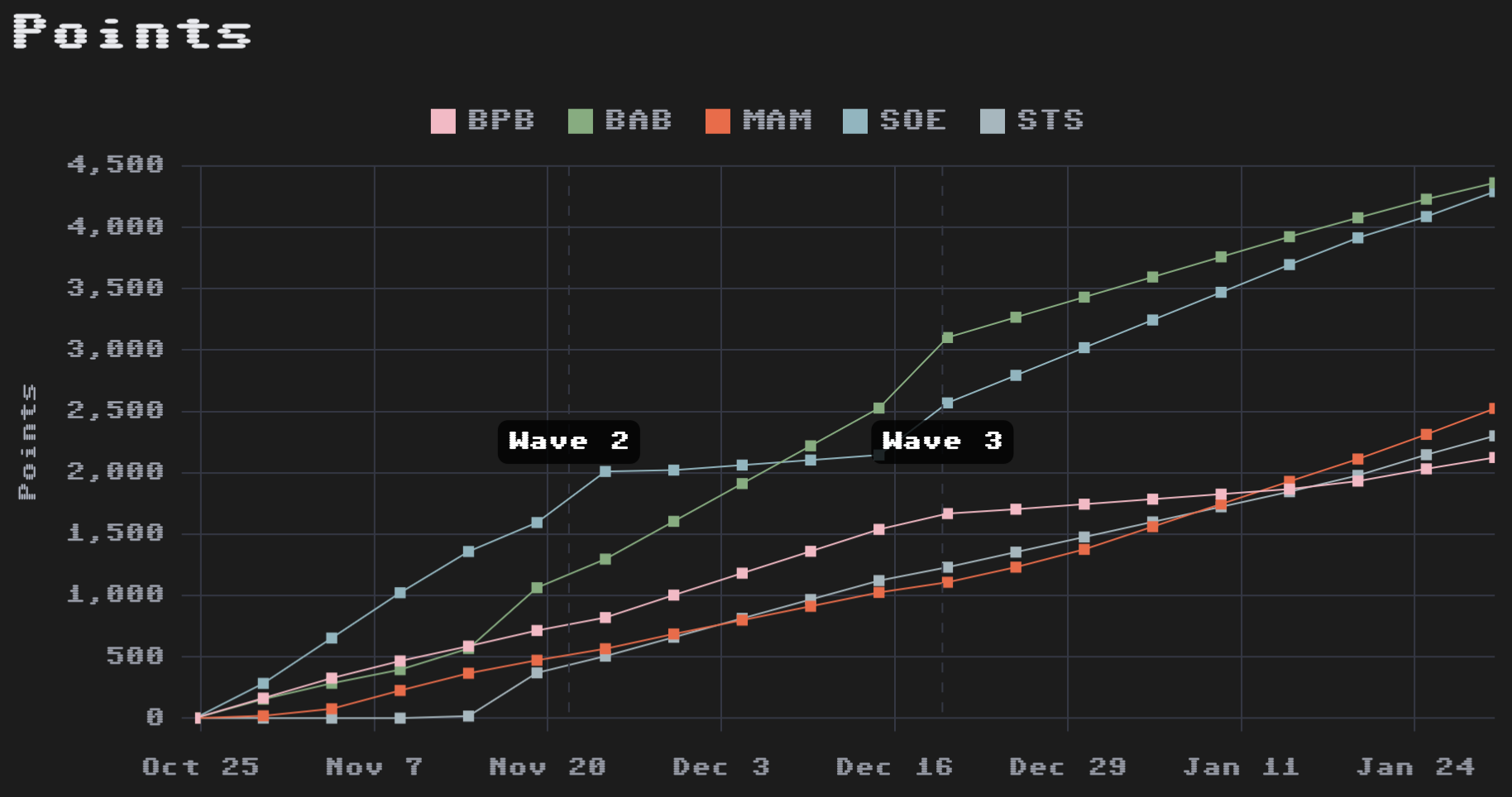
The course is organized around six challenges distributed over three waves. In each wave, students work in small teams for four to six weeks on two challenges: one focused on applying machine learning to security problems and one examining the security of machine learning systems. Challenges are run in a Kaggle-style competition format with a shared scoreboard, allowing teams to compare results throughout each wave. Students are given access to a remote server that provides the research problem and the necessary compute, and are expected to independently research relevant background, explore existing methods, experiment with different approaches, and develop and evaluate their own solutions.
Grading & Deliverables
Grades are based on the results achieved in the challenges and on the clarity with which results are documented and communicated. Challenges are solved in teams, with reports reflecting the team's work, while presentations are completed individually. There are two main deliverables:
- Technical reports. For each challenge, teams submit a short technical report (2 pages) written in the style of a mini research paper. The report briefly introduces the problem, describes the methodology, presents experimental results, and critical reflection. A report template will be provided and must be used. Technical reports and challenge results together account for 80% of the final grade.
- Presentations. Each student gives a 10-minute presentation on one selected challenge, based on the corresponding technical report. Presentations account for the remaining 20% of the final grade.